
Friday, May 10, 2013


Tuesday, May 7, 2013
Karl Holl on the Newness of Jesus
"The God who rigorously insists on the highest does not will that any man should come within range of His judgement... Therefore He seeks them out. And the means by which He lays hold on them is His pardoning grace.
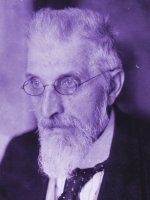
In all other doctrines of salvation the belief in liberation is founded on the conviction of the ineradicable nobility of mankind... The god-like in man must come into its own. Jesus, however, instead of this, sees a deep gulf between God and man... Jesus stress is laid... on the fact that man has forfeited his worth but that nevertheless God accepts him.
Jesus' conception of God was new...
Monday, March 25, 2013
an interesting critique of the "radical" faith movement
"The reliance on intensifiers demonstrates the emptiness of American Christianity's language. Previous generations were content singing "trust and obey, for there's no other way." Today we have to really trust and truly obey. The inflated rhetoric is a sign of how divorced our churches' vocabulary is from the simple language of Scripture.
And the intensifiers don't solve the problem. Replacing belief with commitment still places the burden of our formation on the sheer force of our will. As much as some of these radical pastors would say otherwise, their rhetoric still relies on listeners "making a decision." There is almost no explicit consideration of how beliefs actually take root, or whether that process is as conscious as we presume."
http://www.christianitytoday.com/ct/2013/march/here-come-radicals.html?paging=off
And the intensifiers don't solve the problem. Replacing belief with commitment still places the burden of our formation on the sheer force of our will. As much as some of these radical pastors would say otherwise, their rhetoric still relies on listeners "making a decision." There is almost no explicit consideration of how beliefs actually take root, or whether that process is as conscious as we presume."
http://www.christianitytoday.com/ct/2013/march/here-come-radicals.html?paging=off
Tuesday, February 12, 2013
Paul David Tripp Quote
Great quote from Paul David Tripp in his book "Dangerous Calling: Confronting the Unique Challenges of Pastoral Ministry."

Monday, January 28, 2013
gravity always wins: Radiohead and Christianity Part IV
Part I, Part II, and Part III
19 For
what happens to the children of man and what happens to the beasts is the same;
as one dies, so dies the other. They all have the same breath, and man has no
advantage over the beasts, for all is vanity.
20 All go to one place. All are from the dust, and to dust
all return. 21 Who knows
whether the spirit of man goes upward and the spirit of the beast goes down
into the earth?
- Ecclesiastes
3:19-21
2 It is
the same for all, since the same event happens to the righteous and the wicked,
to the good and the evil, to the clean and the unclean, to him who sacrifices
and him who does not sacrifice. As the good one is, so is the sinner, and he
who swears is as he who shuns an oath. 3
This is an evil in all that is done under the sun, that the same event happens
to all. Also, the hearts of the children of man are full of evil, and madness
is in their hearts while they live, and after that they go to the dead. 4 But he who is joined with all
the living has hope, for a living dog is better than a dead lion. 5 For the living know that they
will die, but the dead know nothing, and they have no more reward, for the
memory of them is forgotten. 6
Their love and their hate and their envy have already perished, and forever
they have no more share in all that is done under the sun.
- Ecclesiastes
9:2-6
This
might seem weird, but I’ve always found it oddly comforting that the Bible
doesn’t sugarcoat death. Unlike other
religions or worldviews that see death as a way of transcending our earthly
shells, the Bible views it as an unnatural enemy and curse that must be
destroyed (1 Cor 15:26). For me, this
affirms the ghastly reality that is death.
Tuesday, December 18, 2012
Letting God be God in Light of Sandy Hook
Originally
I was going to stay silent on the blogosphere concerning the tragedy in
Connecticut. The last thing I thought we
needed was a bunch of pastors and wannabe theologians (like myself)
theoretically waxing on why God would allow such a tragedy to happen. As the days progressed though explanations
began to surface that to me seemed contradictory, unbiblical, and even cruel.
Friday, November 30, 2012
gravity always wins: Radiohead and Christianity Part III
“Ecclesiastes 1:15 15 What is crooked cannot be made
straight, and what is lacking cannot be counted.”
These
words penned by Qoheleth of Ecclesiastes are some of the most penetrating in
the entire cannon of the Bible. In one
sentence the great teacher poignantly expresses what we all know: something is
wrong that we can’t quite fix. Thousands
of years later the Apostle Paul expanded on Qoheleth’s observations by plainly
stating just what is crooked and lacking.
Subscribe to:
Posts (Atom)